



Paludiculture Newsletter 4|2025
Paludi Highlight
Cuddling mires: Increased empathy for mires
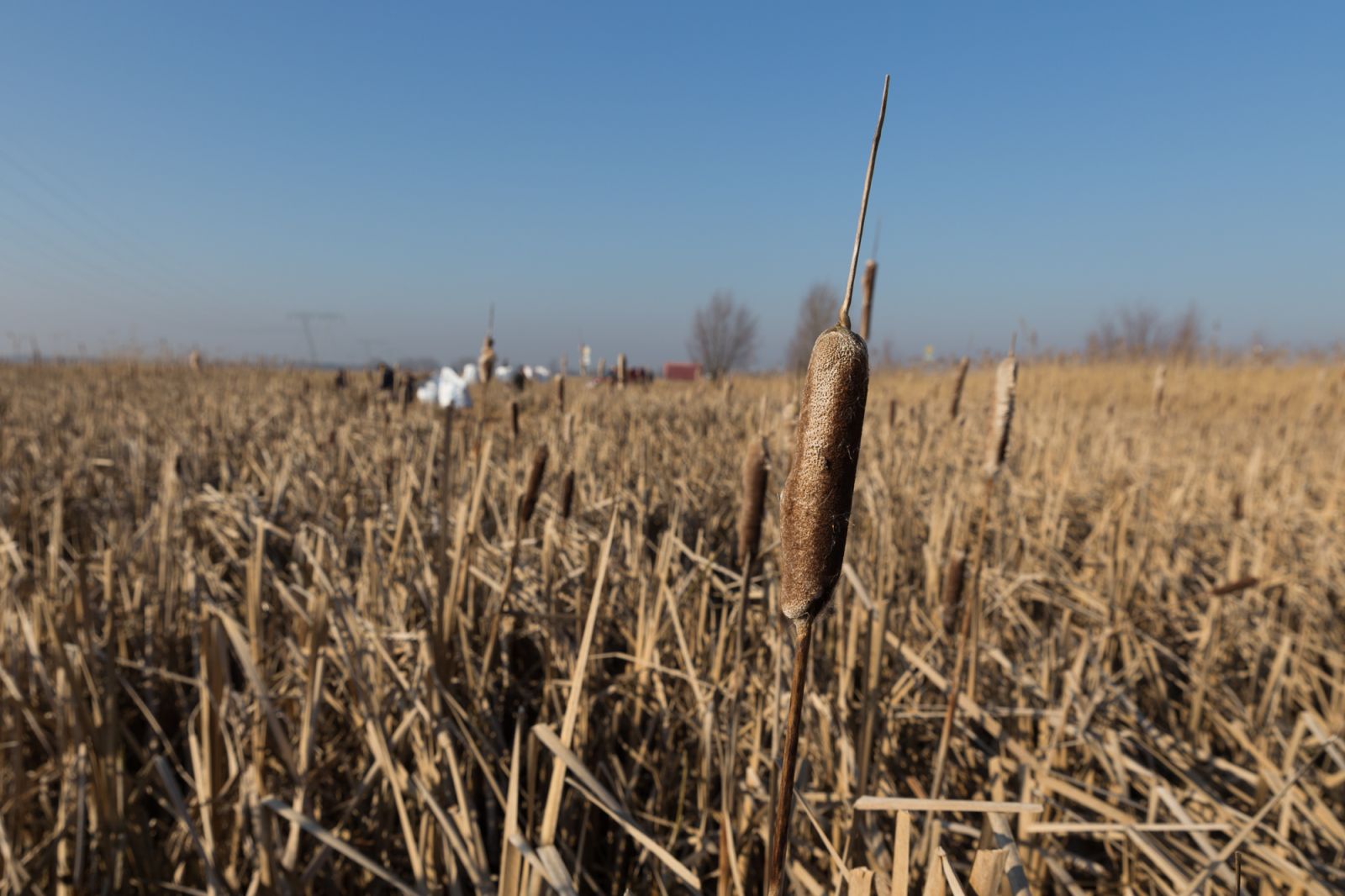
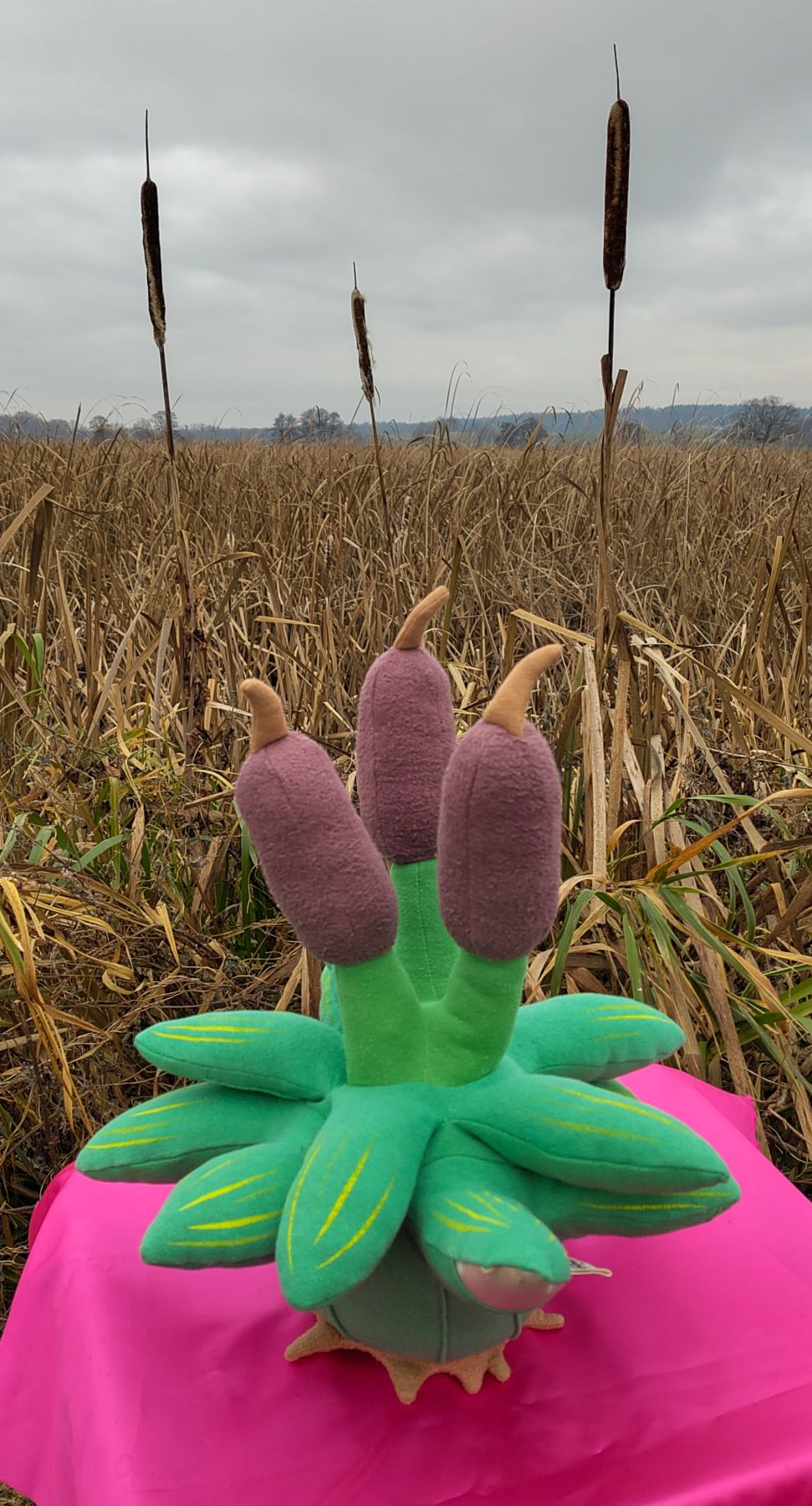
Artist Daniel Hengst wants to improve people's relationship with peatlands. That's why he creates cuddly plants. His textile sphagnum moss or cattail plants are filled with biomass from peatland plants and are designed to provide a sensual experience of rewetting and paludiculture.
In 2019, Berlin-based artist Daniel Hengst visited the Ķemeri Moor near Riga in Latvia as part of a residency programme. He was overwhelmed by the vastness of the bog and could not get it out of his mind. Since then, he has dedicated his artistic work to mires and their plants. His virtual reality artwork Blooming Love (2020) uses VR glasses to immerse visitors deep into a Latvian raised bog, while his work Nastien & Tropismen (2022) is a media art installation consisting of light, sound and code that focuses our gaze on the movements of bog plants.
‘I quickly found out why I had never had an experience like the one in Riga before: due to their destruction and conversion to agricultural land, peatlands are rarely visible in Germany,’ says the artist. ‘Many people have no relationship with peatlands, or only a negative one. I would like to work on that.’ Inspired by the beauty of cottongrass and cattails, he wondered why there are many cuddly animal toys but hardly any cuddly plants. For him, these plants are lovable creatures whose appearance invites us to cuddle them. With this project, he wants to explore how this form of socialisation could change our relationship with plants. Over the next months, Moore kuscheln is to take the form of a cuddly exhibition that will be flexible in size and duration, allowing it to travel to rewetting sites in Central Europe. Hundreds of cuddly plants filled with cattail seed wool invite visitors to experience the peatlands and the changes in the landscape not only metaphorically, but also in a very tangible way.
With the support of the Greifswald Moor Centrum, the artist harvested cattails near Neukalen in Mecklenburg-Vorpommern in autumn 2024. With the help of the Leibniz Institute for Agricultural Engineering and Bioeconomy (ATB) in Potsdam, the plant fibres were processed into a loose mass of seed hairs. At Saxon Textile Research Institute in Chemnitz, Hengst and his colleagues conducted further processing and functionalisation tests on the resilience, durability, fire safety and sterilisation of the fibres. Thanks to his newly acquired knowledge of technical processes in textile manufacturing and the technical terms he learned, the artist discovered that efforts were being made to process cattails on a large scale in Germany until the 1930s and that many patents had even been filed for their processing. The project has since also been exploring these historical methods.
In collaboration with textile designer and clothing technician Silvia Wald, designs for two cuddly plants were created in the summer of 2025. Hengst says: ‘The size, colour and proportions of the cuddly plants address key stimuli in perception that can trigger reactions such as care, protection or affection. However, since the cuddly plants have no eyes and no faces, they also address the difference between animal and plant life.’
At both the RRR2025 conference in Greifswald and the family day at Berlin's Futurium in September 2025, the first six inhabitants of the cuddly mire were very well received by young and old alike. In the coming months, further experiments will be carried out on harvesting and processing the cattail seed wool, the designs will be revised and made ready for serial production towards the cuddly exhibition.
The artist has documented the process in more detail on the website moore-kuscheln.de, and a newsletter keeps interested readers up to date.
Peatlands in General
Our post-COP30 peatland series – What about outcomes and perspectives?
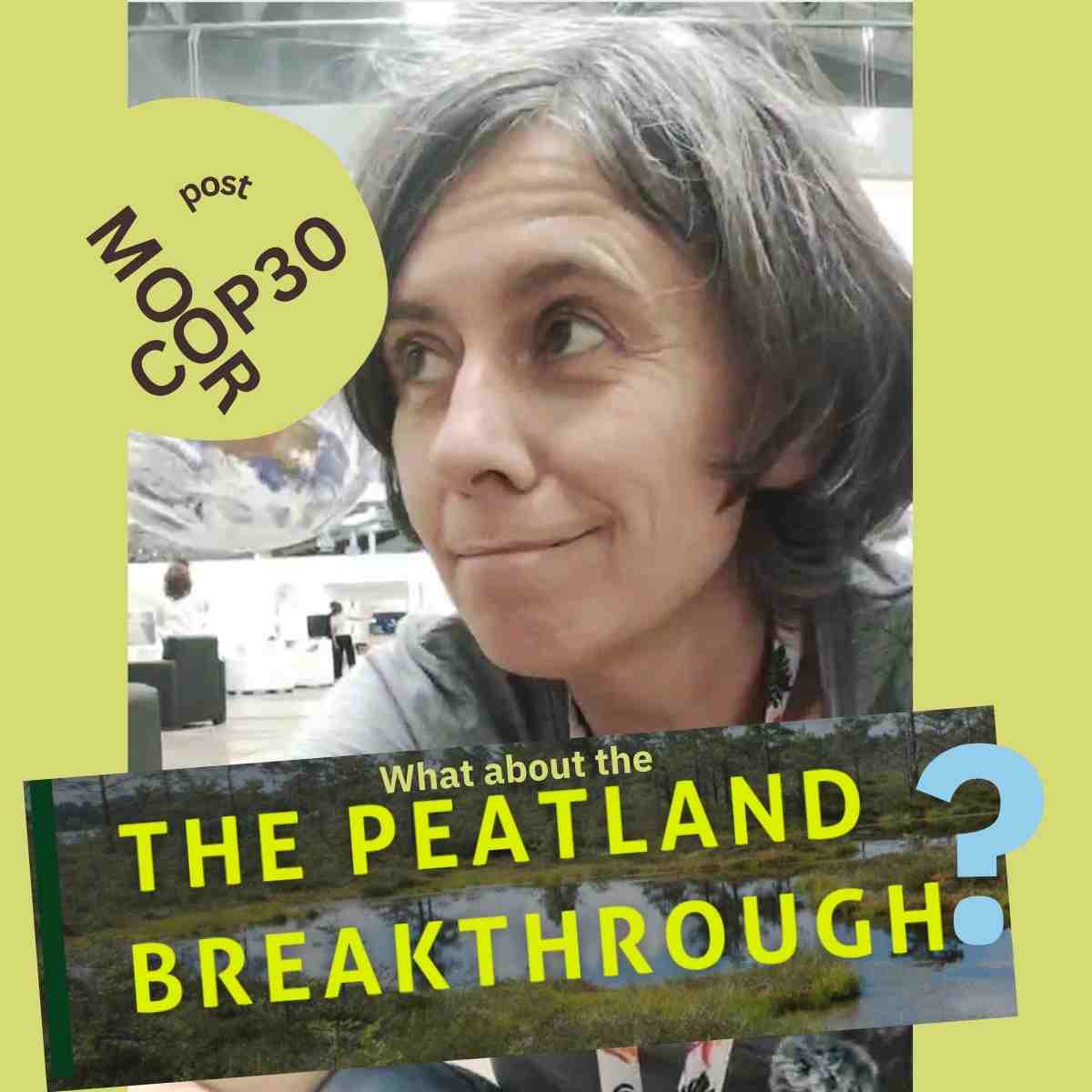
Peatland outcomes and perspectives of COP30? We’ve asked FranziskaTanneberger for commenting. As a member of the German delegation she was on the ground at Belém and sums up the efforts to turn science-based peatland knowledge into practical, large-scale action.
In our short post-COP30 peatland series we’ve asked FranziskaTanneberger for commenting with experiences from the ground as a member of the German delegation in Belém.
High on the agenda: the “Peatland Breakthrough” at the 17th November – a global call to action by a strong peatland partnership, including amongst others Greifswald Mire Centre, Wetlands International, FAO and UNEP. Why it wasn’t the breakthrough itself yet, but rather a pre-launch publishing the Science-based Framework for Global Peatland Targets & Guiding Principles, Franziska explains in this video: COP30 Series – Part 6: #Peatland Breakthrough – not yet, but... .
Nevertheless, the side event was a considerable success: Germany joined Peru and Uganda in being a Champion Country for the Peatland Breakthrough, which is a collaborative effort to accelerate and mobilize action to conserve, rewet and restore, and enable the sustainable, wise use of the world’s peatlands.
Also, Franziska Tanneberger stresses that science-based targets for peatlands Included of the official Outcome Report of the Global Climate Action Agenda at COP 30 | UNFCCC of COP30 is an encouraging outcome. Find peatland content there on p. 18 and hear more about it in this video: COP30 Series - Part 4: COP 30 Outcome
There is peatland perspective for the upcoming COPs: the next global climate summit (UNCCC) will take place in Antalya/Turkey – under Australian leadership. Of course, the country doesn’t have as much peatlands as Brazil – the tropical country with the largest area of peatlands – but there is a lot of activity on these ecosystems especially in neighbouring Caucasian countries. And also the next meeting of the Convention on Combatting Desertification (UNCCD) in Ulan Bataar/Mongolia is likely to have a focus on peatlands. More details in:COP30 Series - Part 5: #COP30 Preview next COP
More details about peatland events on COP30 with involvement of Greifswald Mire Centre in this media information of Greifswald University.
Peatland Library officially opened
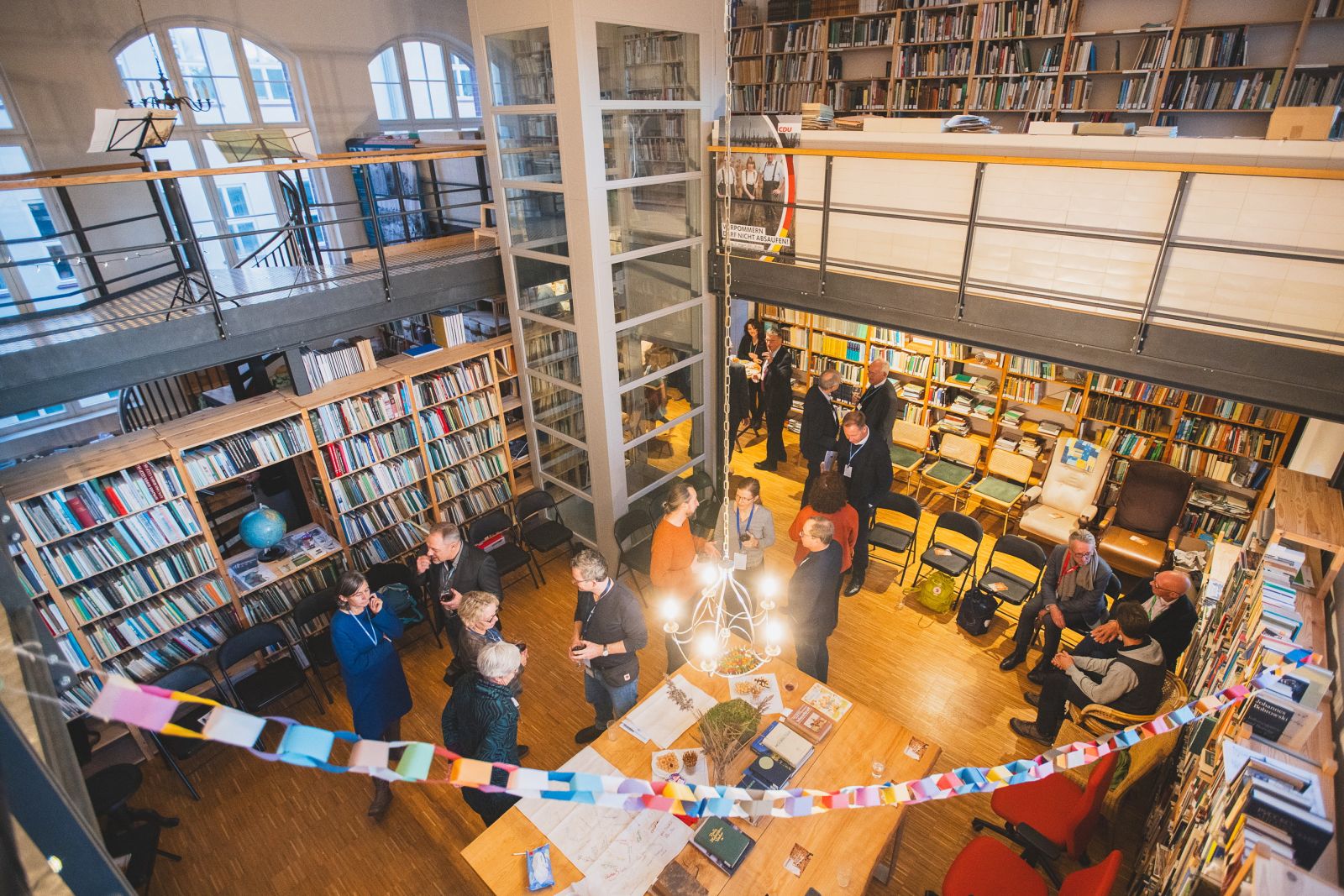
At the end of October, the Peatland Library opened in the former lecture hall of the “Alte Chemie” building at the University of Greifswald. The vision for this repository of knowledge and meeting place overcame many challenges, such as structural engineering, financing, and contaminated sites, before it could be realised.
On October 30, 2025, the Peatland Library was officially opened in Greifswald. Around 45 guests from the worlds of science, politics, and civil society accepted the invitation to jointly open a new place of knowledge and exchange dedicated to the protection and importance of peatlands.
The opening was preceded by welcoming speeches by the rector of the University of Greifswald, the mayor of the city of Greifswald, and the state secretary for Vorpommern. In their speeches, they emphasized the importance of Greifswald's peatland research and the Peatland Library as a central repository of knowledge and meeting place.
This was followed by a tour of the library and the world of peatland literature. During the tour, members of the board and trustees of the Peatland Library Foundation presented selected books that reflect the foundation's goals and the library's extensive collection:
From the basic scientific literature of C. A. Weber, Jekatarina Galkina, Michael Succow, and Lebrecht Jeschke, the library's oldest book, to the world of novels by Harriet Beecher Stowe and Ann Burg, to children's books such as “Anna and Jana.” The Peatland Library is a safe home for all publications on peatlands.
The event was accompanied by music from a cornetto and violin, which brought the Song of the Peatland Soldiers to the library – a touching tribute to the role of peatlands in world history.
After the official program, those present exchanged ideas over drinks and explored the new premises. In the future, the Peatland Library will not only be a peatland archive and a place for learning, creativity, and research, but will also host events and projects related to peatlands.
Author: Eline Joosten
The Paludiculture Interview: LCAs with Clemens Kleinspehn
From peatland to market – how to calculate the life-cycle for paludiculture products?
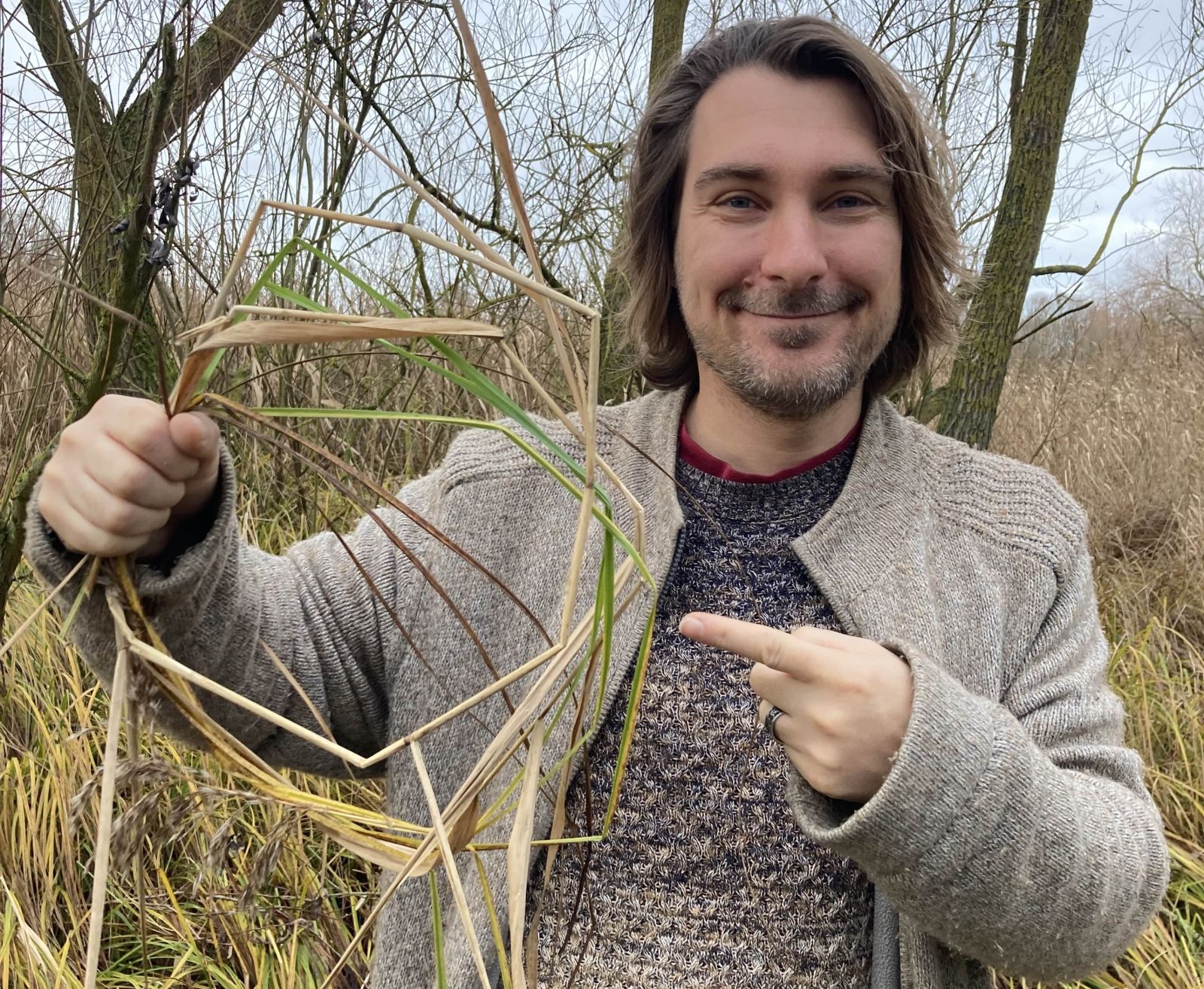
Clemens Kleinspehn is working to calculate the environmental impact of a Paludi product over its entire life cycle within the PaludiAllianz project of Greifswald University and partners. This analysis is quite important – it provides a basis for its economic competitiveness.
Mr Kleinspehn, LCA – what exactly does that mean?
Life cycle analysis is a systemic method for ecological reporting. It records the environmental impact of a product throughout its entire life cycle – from raw material extraction through recycling until its disposal. There are two different types of LCAs: one for process optimisation in production and the other for comparing two products. The latter is more relevant to us, because we want to show that paludiculture products perform better than their common competitors.
And which product is currently being examined?
We are focusing on the shipping carton used by the OTTO Group, which contains 10% paludiculture biomass.
And how exactly do you conduct an LCA – specifically for a paludiculture product?
That's a bit of a challenge. Usually, ecological databases such as Ecoinvent, Sphera or Ökobaudat are used for the calculation. But these do not contain any data on paludiculture, yet. We have to compile the data ourselves within our project PaludiAllianz PaludiAllianz - Moorwissen de.
Data is collected for each step of the process – for biomass production, for example, you would look at sowing, fertilisation, time and energy consumption when using machinery. One could go into more in-depth and include the production of the machinery itself in the calculation. However, there are no mandatory criteria for what must be included in LCAs – it is at the discretion of the analyst. Thus, there is no common standard and LCAs can be misleading to present products in a favourable light. One well-known example of this is nuclear power, which has great ratio of produced power to produced CO2, if uranium extraction, the construction and deconstruction of power plants and the disposal of fuel rods are not included in the calculations.
Hmm, ok – but surely, you wouldn‘t want to manipulate anything - what does that mean in terms of the discretion of this LCA?
We are guided by existing LCAs – there is one for grass paper and one for Sylphie paper. Both are competing products that we want to compare ourselves with. That is why we use similar standards. Our LCA focuses on the categories of water and energy consumption, biodiversity and the resulting GHG emissions. Reduced soil-borne emissions in particular play a role in paludiculture products. Since we are limited in our working capacity, other categories, which are often included in the construction sector, like for example ecotoxicity, will not be considered in our LCA. We are still pondering one question: Will our LCA compare paludiculture to agriculture on organic soils or also to mineral soils? In any case, we would present our results transparently.
You are usually not present when biomass is harvested or pressed into cardboard. How do you calculate the ecological impacts?
We will use data from many colleagues and partners, some of whom have been researching and publishing on paludiculture for a long time. For example, they have recorded the work processes involved in many harvests using cameras, GoPros. The processing companies also provide data, since it’s in their own interrest. We already have data from paper production and are currently missing only the ‘cradle to gate’ section - from raw material to factory. This section is currently missing, for example what is the ecological impact, if hay is pressed into pellets and thus prepared for paper production.
Does that take quite a long time? What is the timeframe for this LCA?
Once all the data has been collected, there is standardised software for LCAs. We commission this calculation and then estimate six months – not including the time required for research, of course. This is a significant initial investment for a case study based on the OTTO shipping box. Nevertheless, it is worthwhile because individual work phases can be transferred to other product LCAs, for example from raw material extraction in the field to transport to the factory.
Can you say anything about the different phases yet? There is also production, use and disposal to consider...
At least this much: From gate to grave – i.e. from leaving production to disposal – paludiculture products are comparable to existing products in the paper and cardboard sector under consideration. This is because, for example, the machines used in production are the same. However, the big difference in the environmental impact of paludiculture products is the extraction of biomass at the very beginning. More cannot be said at this stage.
What happens once the LCA is ready?
Customers ask companies for LCAs because they are a criterion for purchasing. They make their decision based on product quality, cost and the ecological footprint, as evidenced by an LCA, for example. A higher price can be justified by the other two criteria.
Transparency regarding a product's ecological footprint is therefore important. Our analysis will be published and provide a basis for comparison for other producers and interested citizens. For example LCAs express climate impact in tons of CO2 equivalents per ton produced paper, which makes them understandable even to laypeople.
Mr Kleinspehn – does this analysis hold a particular fascination for you?
I find it interesting to first identify the individual production steps of a product in LCAs and then determine the variables. For example, in the case of fertilisation – how often or how much fertiliser was used? Or in the case of energy consumption – is it fossil-based or renewable? For me, as a passionate computer gamer, it's a bit like a game where you can put components together.
The interview was conducted by Nina Körner.
News from paludiculture projects
Sneak peak: PaludiScout
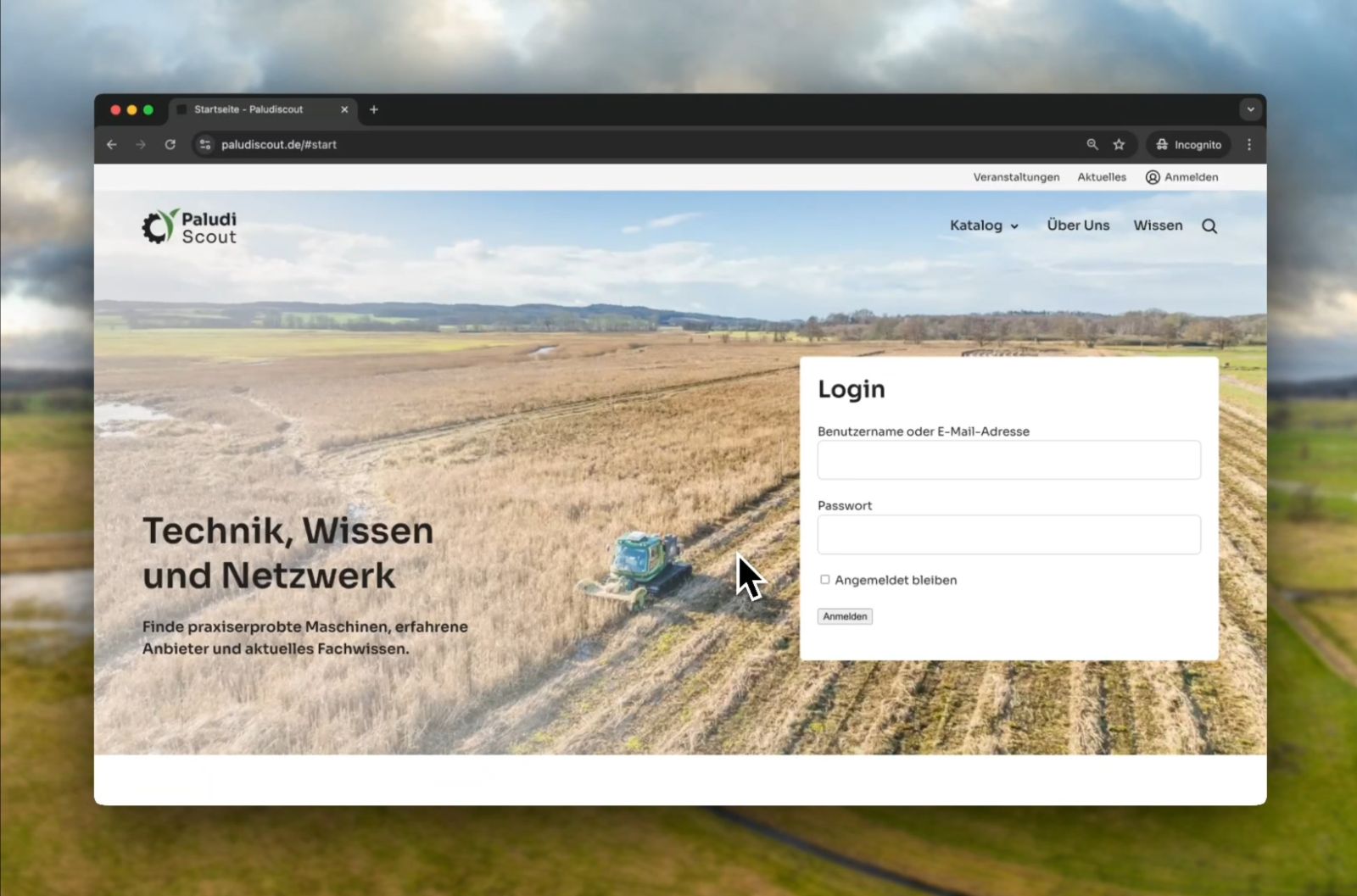
PaludiScout aims to simplify the search for specialised technology and equipment for paludiculture. To this end, it has developed a new online information platform and marketplace for specialised paludiculture harvesting technology. A preview is now available.
Preliminary demo of the Paludiscout website:
Until now, finding suitable machinery has often been a complex and time-consuming task, and a major hurdle for many land users. PaludiScout brings together all the relevant information on an online platform for the first time and offers users:
– a structured overview of available specialised machinery,
– comparison options for technology and suppliers,
– direct access to dealers, developers and contractors,
– as well as practical technical information.
How PaludiScout creates transparency, facilitates decision-making and supports the sustainable management of peatland sites can now be seen here in our preview. The launch is planned for early 2026. PaludiScout is being developed by the University of Greifswald as part of the „PaludiZentrale“ project.
Pioneering for paludiculture with 2 new partners & 1 new industry
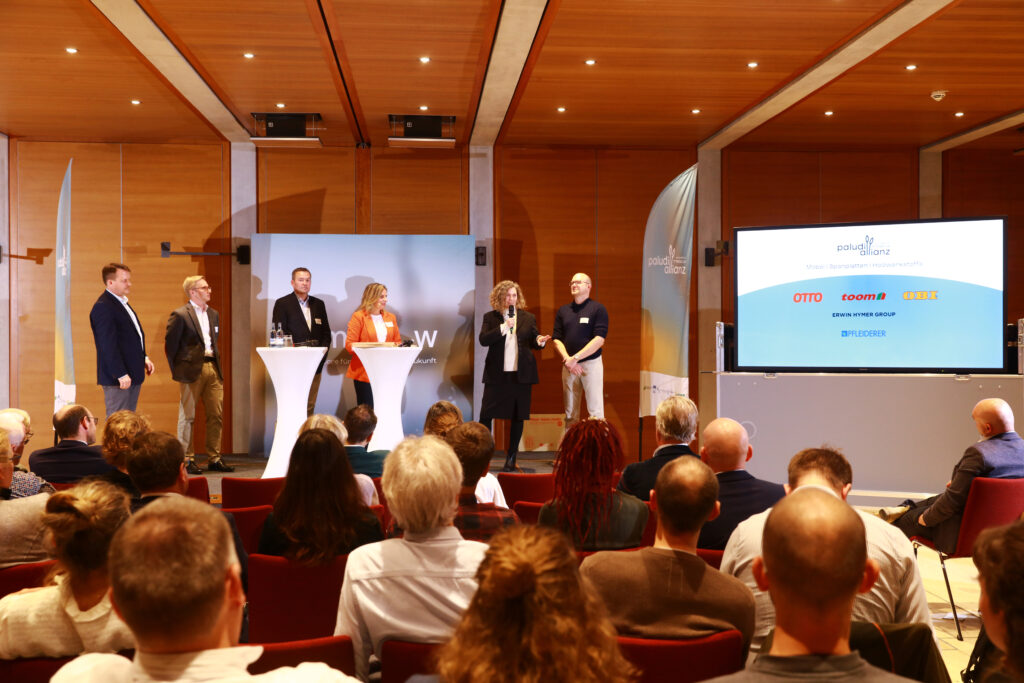
The Alliance of Pioneers has won wood-based materials manufacturer Pfleiderer and the Erwin Hymer Group, renowned for manufacturing recreational vehicles as new members, and is also setting up a extra Expert Circle for the “Furniture, Wood-Based Materials, and Chipboard” industry sector.
At the annual event of the Alliance of Pioneers/toMOORow on October 28th in Berlin, the alliance was able to welcome another industry sector for the development of innovative products from paludiculture biomass. With the Expert Circle “Furniture, Wood-Based Materials, and Chipboard,” it is tapping into new potential for successful value chains with renewable raw materials from wet peatlands. In addition, two new partners were welcomed to the Alliance of Pioneers, in which companies have voluntarily joined forces to integrate paludiculture biomass into their industrial production. Leading wood-based materials manufacturer Pfleiderer and the Erwin Hymer Group, a renowned manufacturer of recreational vehicles, are now part of the alliance and are working together with alliance partners OTTO, toom, and OBI in the new Expert Circle to develop innovative pilot products from paludiculture.
Read more about the PaludiAllianz annual conference here (Jahresveranstaltung: Allianz der Pioniere wächst – Neue Partner, neue Branche! – toMOORow).
The “Alliance of Pioneers” was launched in 2024 by the toMOORow initiative with the aim of establishing and scaling value chains for paludiculture products on an industrial level. There are currently 17 economic partners.
MOORnet Conference - presents project results
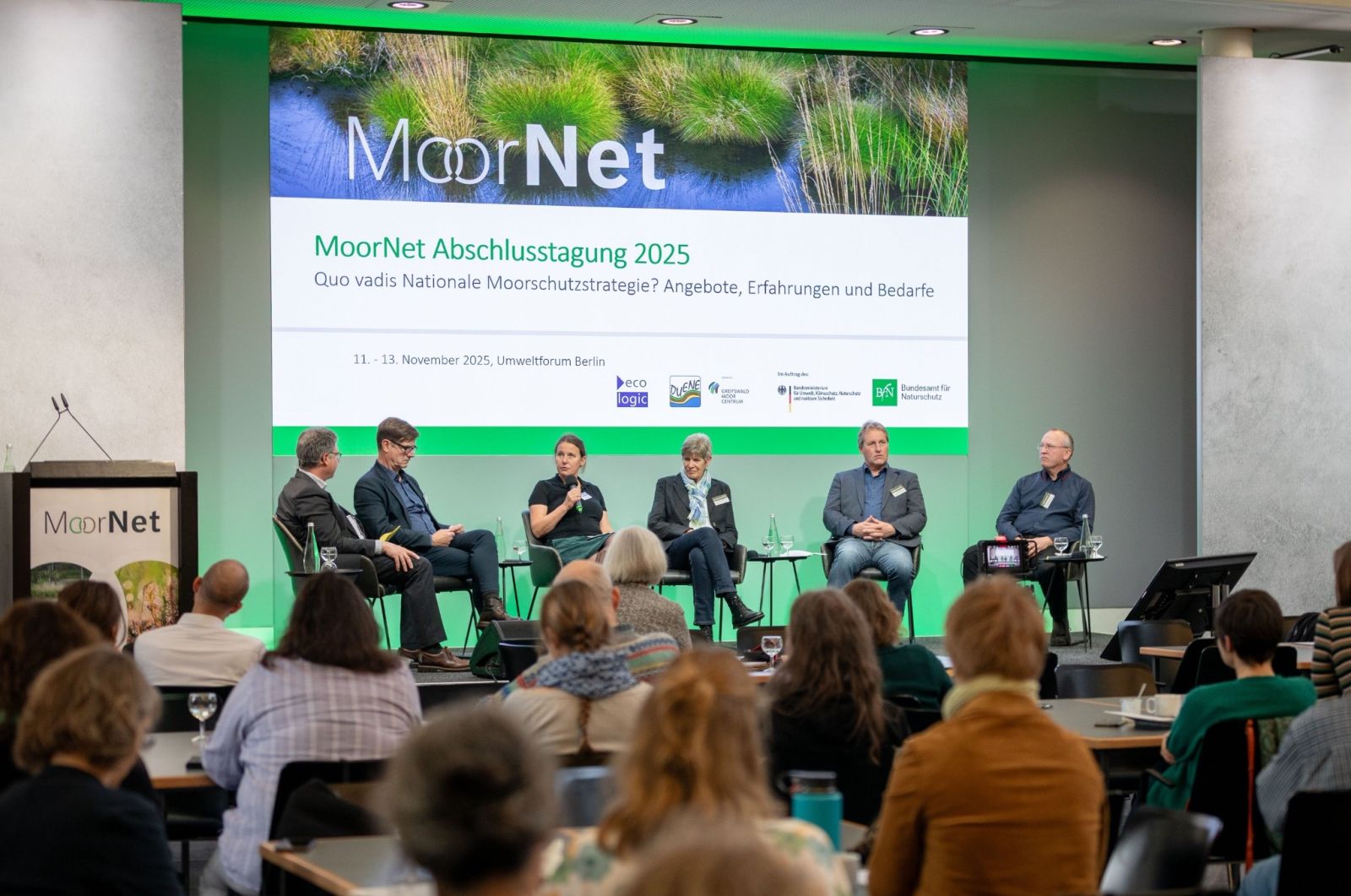
Project database, website, mailing list - the outcomes of the MoorNet project are available for public use even after the project has ended! Of course, also with benefit for all those interested in paludiculture.
Since 2022, MoorNet has been providing technical support as a research and development project for the implementation of the National Peatland Protection Strategy (Nationale Moorschutzstrategie) and networking amongst peatland protection stakeholders in Germany - with useful outcomes that are still publicly available:
The MoorNet project database provides information on projects, funding and institutions. New projects can be registered there using this form. The MoorNet mailing list sends latest news on peatlands, and those interested can still register online.
The MoorNet final conference in mid-November 2025 demonstrated the wealth of expertise, commitment and experience within the German peatland conservation community. Over three days, more than 150 participants from administration, practice and science shared knowledge, exchanged experiences, discussed problems and debated solutions. An excursion to a rewetting project in Brandenburg completed the programme. Presentations and selected contributions from the conference will soon be published as videos at the MOORNet-Website – for anyone who would like to delve deeper into the content or review it.
The MoorNet project is being carried out on behalf of the BfN with funding from the BMUKN by the Ecologic Institute and DUENE e.V., partners in the Greifswald Mire Centre.
Anti-mud mats from the peatlands
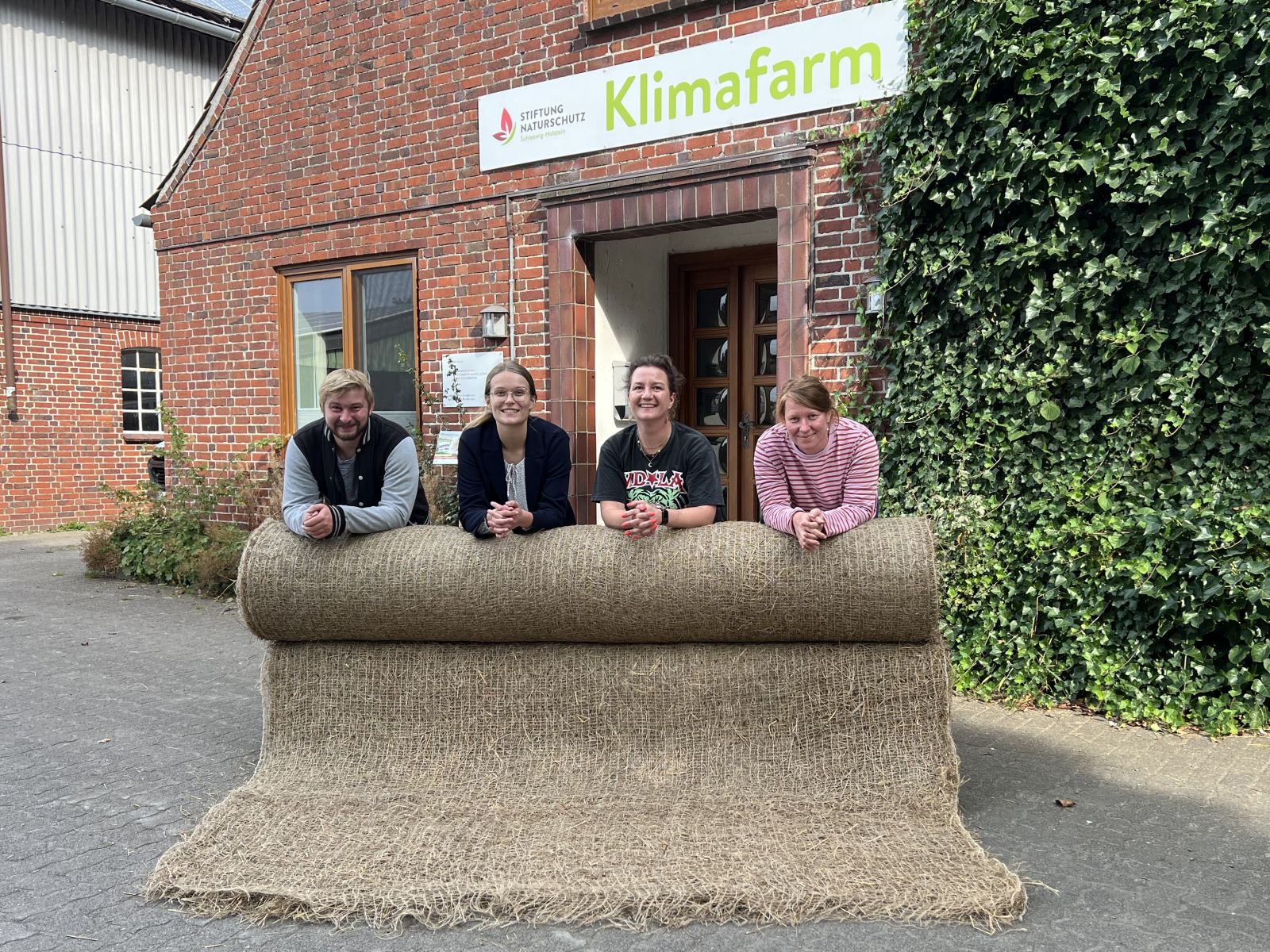
Soil protection mats made from paludiculture biomass of the Climate Farm project passed a tough endurance test at the Wacken Open Air Festival this summer. This combination has now been honoured with the ‘Future of Festivals Award’.
The anti-mud mats made from paludiculture biomass from the Klimafarm pilot project in Schleswig Holstein were used this year at the almost traditionally muddy Heavy Metal Festival in Wacken. "In the summer, the mats in combination with wood chips kept a footpath between the glamping and stage areas largely free of mud. Unlike on other paths, metal fans did not get stuck ankle-deep in mud there," according to the project website.
The combination of climate-friendly product and event was honoured at the end of November with the Future of Festivals Award at the trade fair of the same name – a great success for paludiculture!
Soil protection mats offer erosion protection and are used, for example, in road construction or bank protection.
Picture: Christopher Kleinert (Wacken Open Air), Insa Trede (Wacken Open Air), Marie Bajohr (Climate Farm Project), Elena Zydek (Climate Farm Project) with a soil protection mats made from paludiculture biomass of the Climate Farm project (Foto: Stiftung Naturschutz Schleswig-Holstein)
Events
All current events are compiled in our online calendar.