



News
2026
The Bright Spots
by Berit Krondorf (comments: 0)
New study highlights successful initiatives
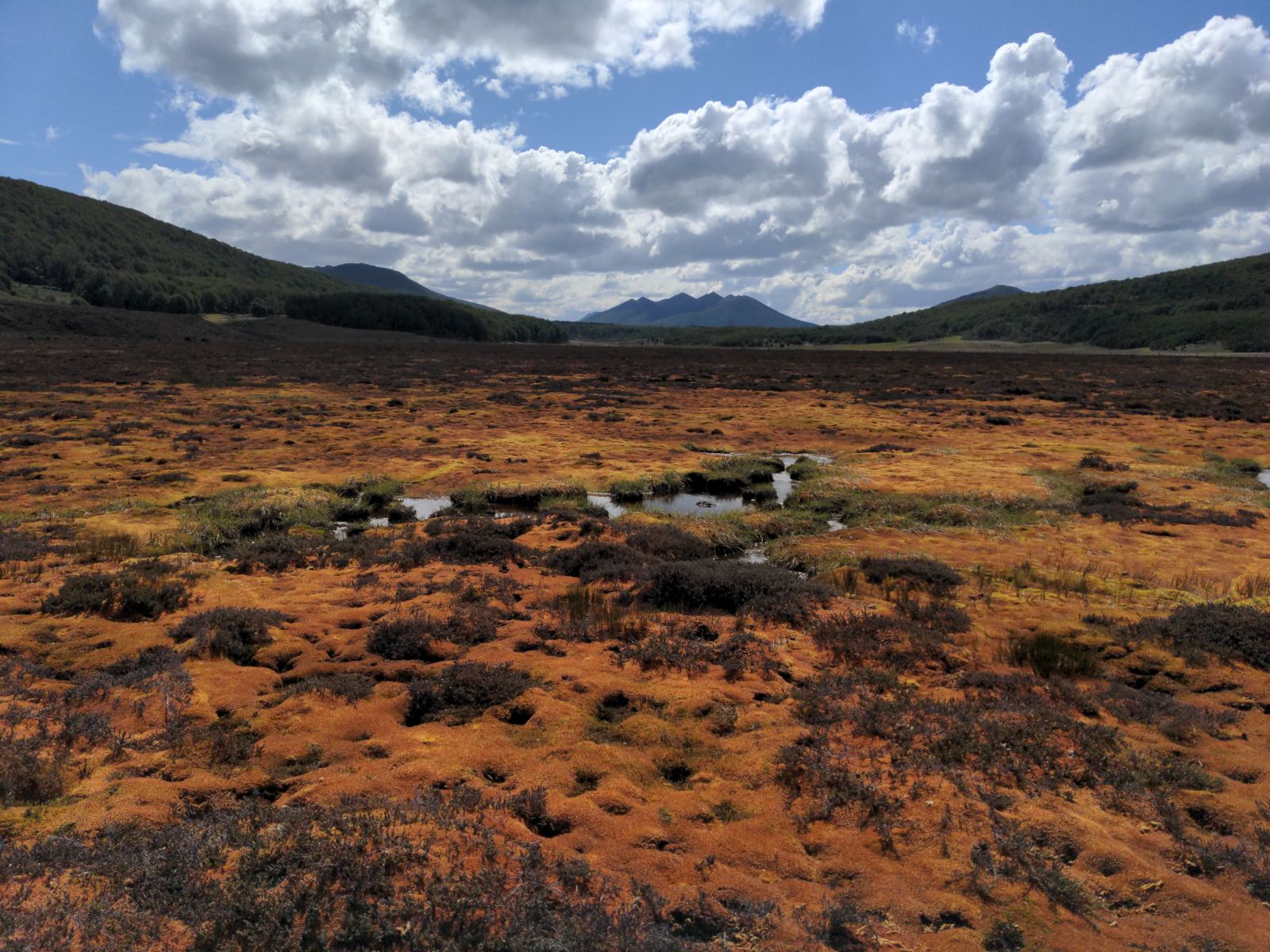
05/08/2026 A new international study titled “Bright Spots in Peatland Conservation, Rewetting, and Restoration”, published in Ambio, identifies nine areas of action and initiatives that are already successfully protecting, rewetting, and sustainably managing peatlands.
The key finding: Successful peatland conservation takes many forms. Crucial factors include collaboration between science, policymakers, and local communities, as well as the courage to break new ground.
Examples range from large-scale rewetting programs in Indonesia to community-based restoration projects in Malaysia, as well as innovative paludiculture and art projects that reconnect people with peatland landscapes.
They demonstrate that the rewetting and sustainable use of peatlands are already working today and can make valuable contributions to climate and biodiversity conservation.
The study was jointly led by researchers from the University of Greifswald—partners in the Greifswald Mire Centre and members of the Collaborative Research Center @WETSCAPES2.0—as well as the Copernicus Institute of Sustainable Development at Utrecht University.
Fentastic!
by Berit Krondorf (comments: 0)
Funding for GMC
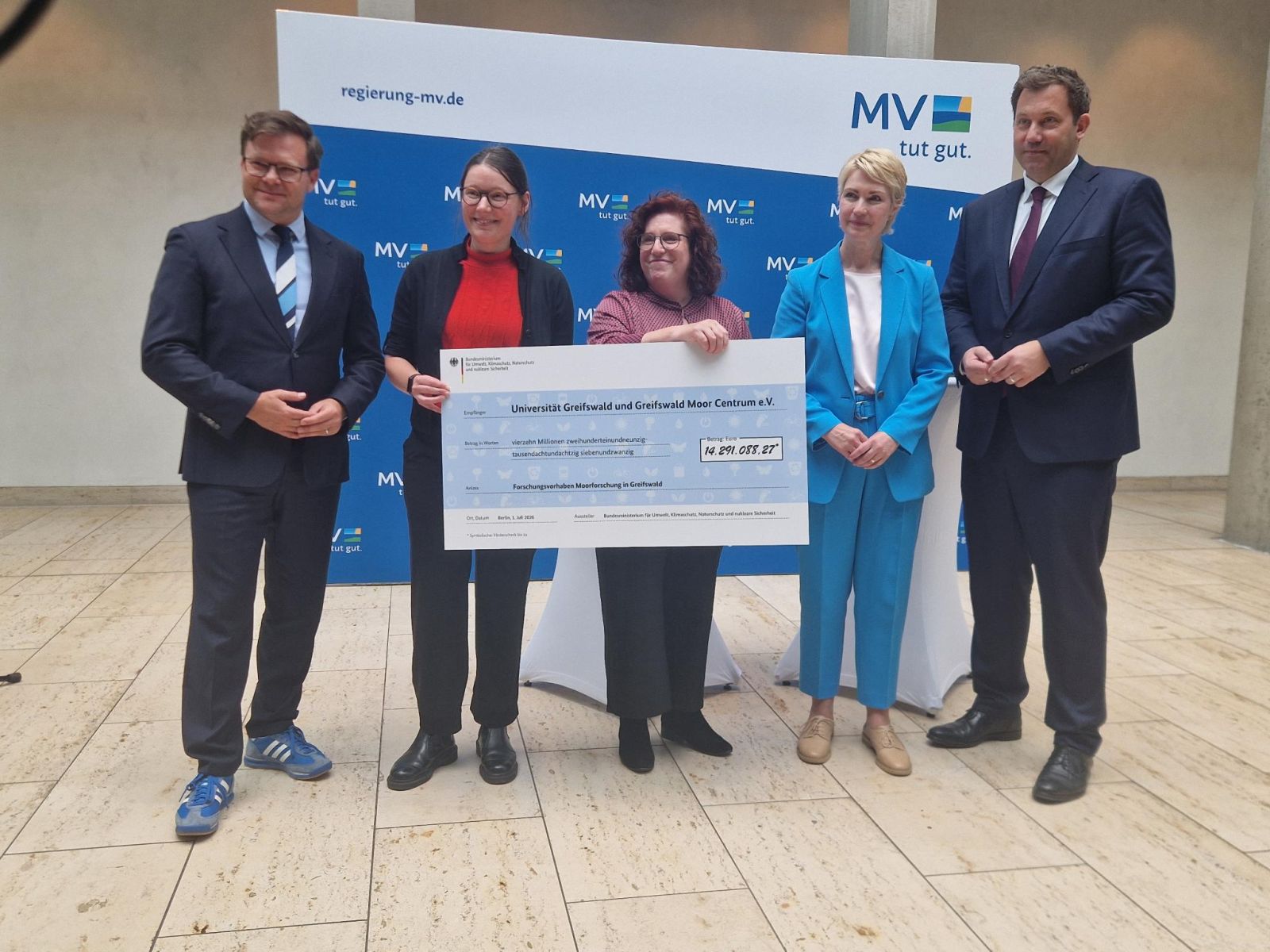
08/07/2025 During an off-site cabinet meeting of the Mecklenburg-Western Pomerania state government with representatives of the federal government at the Mecklenburg-Western Pomerania State Representation in Berlin on July 7, 2026, Federal Environment Minister Carsten Schneider and Minister President Manuela Schwesig presented the University of Greifswald with a grant notification for the expansion of peatland research. Since July 2026, the Federal Ministry for the Environment has been funding the research project with a total of approximately 14 million Euros. The funding lays the foundation for the further development of peatland research and the establishment of the Greifswald Mire Institute (GMI). For more information, see the press release of the Federal Ministry for the Environment and the press release of the University of Greifswald.
Paludiculture Newsletter 2/2026
by Berit Krondorf (comments: 0)
Read new issue now
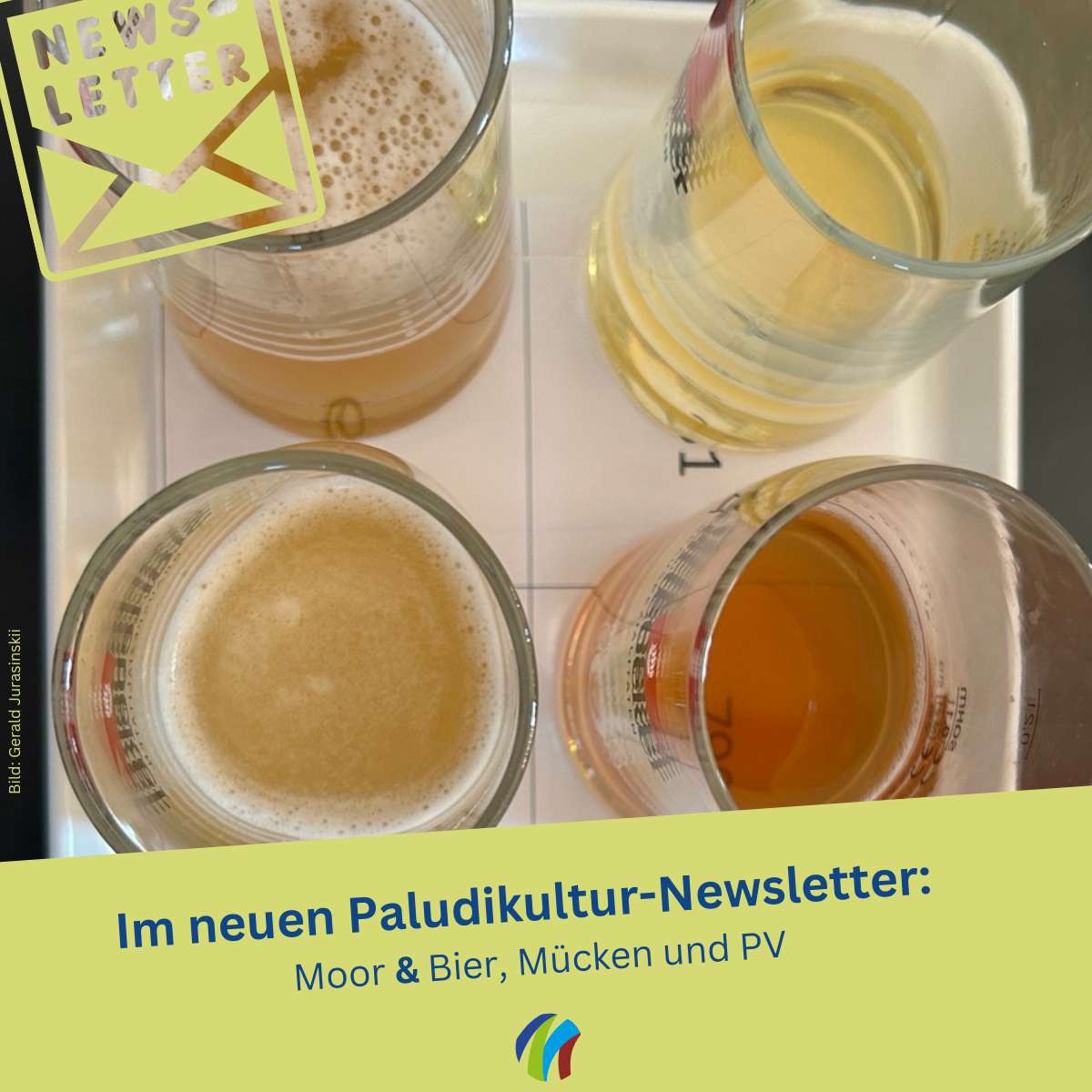
06/07/2026 The Greifswald Mire Centre has published the second issue of the Paludiculture Newsletter this year. Out key topics featured in this edition include:
-
Refreshing: Peatlands and Beer
-
Dual climate benefit: Peatlands and Solar Power
-
Debunking common misconceptions: Interview on mosquitoes and peatlands
Additional materials comprise a new fact sheet examining relationships of peatlands and water resources, information about the current workshop series for professionals an the aftermovie from conference RRR2025 is also accessible online.
Plus more topics and current dates in the event calendar.
We enjoy staying in touch with our readers. What topics would you like to see covered in the paludiculture newsletter? What feedback do you have for us? Feel free to email us at communication@greifswaldmoor.de.
The newsletter is provided by the PaludiZentrale project of Thünen Institut, Universität Greifswald and Succow foundation. It is financially supported by the German Federal Ministry of Agriculture, Food and Home Affairs (BMLEH) through the Agency for Renewable Resources (FNR).
Global Peatlands Initiative
by Berit Krondorf (comments: 0)
Partner meeting in Peru
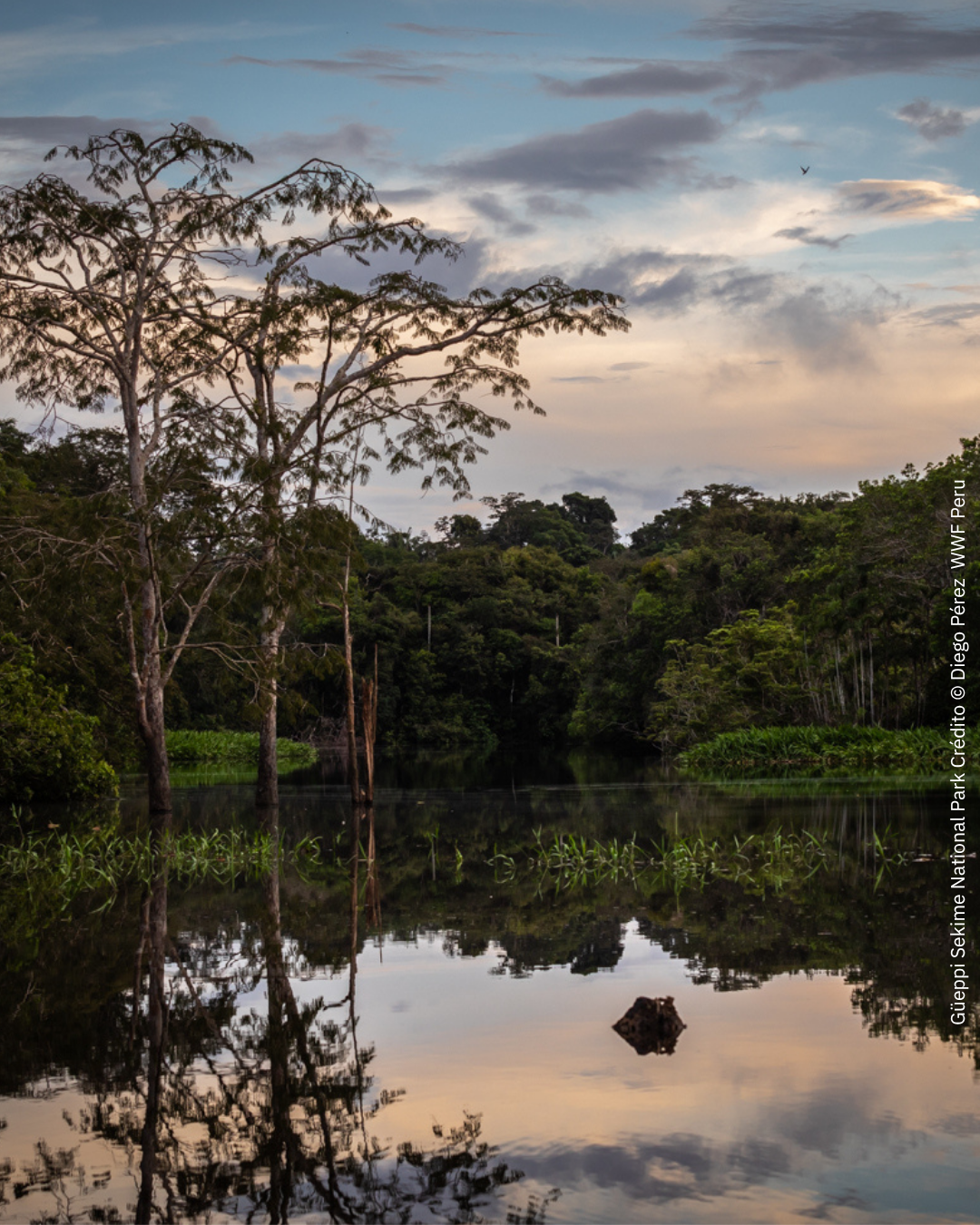
4/07/2026 With a strong triangular knowledge exchange: To achieve more for peatlands more than 100 participants at the recent 4th Meeting of the Partners of the Global Peatlands Initiative (GPI4) in Lima/Peru endeavoured to interlink
- field research in remote and difficult-to-access areas,
- decades of work with local communities
- growing experience with finance instruments and national policy processes
Indigenous Peoples and as well as government representatives of many countries shared their journeys towards integrating peatlands into national legal, planning and monitoring systems.
But - with traditional dances from Peru and the wonderful cultural performance by musicians of the Democratic Republic of the Congo, the meeting made a pivotal point: There’s a rich cultural dimension to peatlands – they will not be saved by science facts alone, but also by art, emotion and love.
Members of Greifswald Mire Centre shared work on:
- peatland science products, including the Global Peatland Map, Global Peatland Hotspot Atlas and the Peatland Breakthrough Targets,
- tools and mechanisms to support the integration of peatlands into NDCs and NBSAPs,
- the European Peatlands Initiative,
- peat formation and long-term carbon accumulation,
- and central concepts and definitions for peatland restoration and rewetting.
The Fourth Meeting of the Partners of the Global Peatlands Initiative in Peru reaffirmed that protecting peatlands is key for climate, biodiversity and livelihoods. From science to community action, GPI4 enabled partners to share lessons, strengthen alliances and advance a common agenda for these vital ecosystems. Their contributions to a 10-year strategy for GPI is upcoming.
First Paludi-Summer School
by Berit Krondorf (comments: 0)
Peat under their fingernails, fresh ideas in their minds
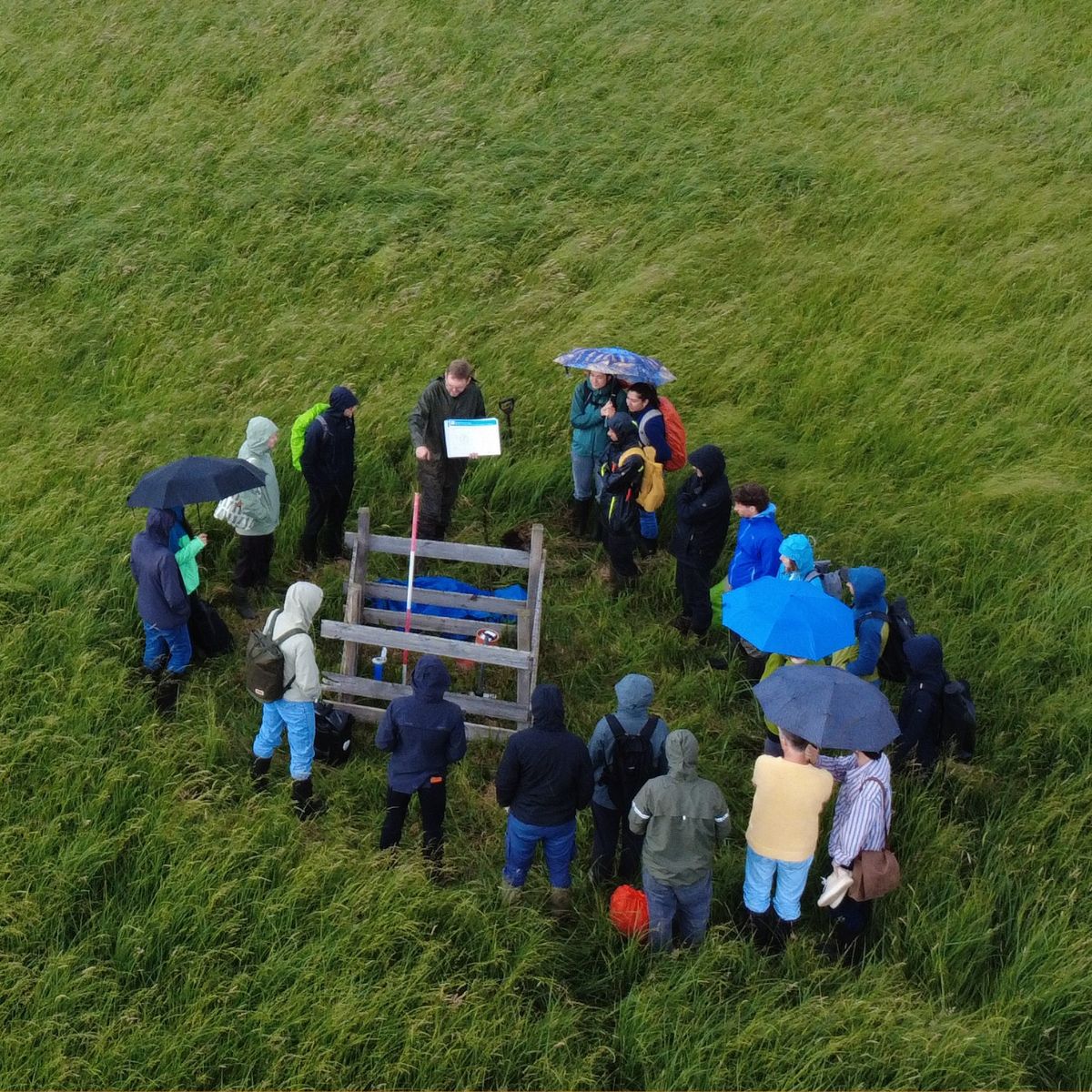
29/06/2026 For ten days in June, twenty early-career scientists from Germany, the Netherlands, and Switzerland, many from PaludiNet projects, came together for the first Paludiculture Summer School, hosted by the PaludiCentral project, a collaboration between the Thünen Institute and University of Greifswald and Michael Succow Foundation, both partners in the Greifswald Mire Centre.
Beginning in Braunschweig and concluding in Greifswald, the summer school offered a diverse programme covering a spectrum of paludiculture related topics. Participants explored the fundamentals of organic soils, peatland hydrology, biodiversity, greenhouse gas measurements, and the socioeconomic and technical dimensions of paludiculture. Theoretical sessions were complemented by lab visits and field excursions, providing opportunities to deepen one’s own understanding and to put knowledge into practice. Furthermore, the poster session facilitated an in-depth exchange not only amongst the participants, but also with researchers from the Thünen Institute who were taking part in the presentation (link to interviews). Participants left the summer school with peat-stained fingers and with new questions on the placement of Eddy covariance towers and challenges involved in measuring hydraulic conductivity.
The excursions provided the opportunity to visit a range of sites within the PaludiNet network. Highlights included the MOOSland site and witnessing a sphagnum harvest; the RoNNi project, where preparations for Typha planting were underway; the reed plantation of the PaludiMV project; an established Typha cultivation site in Neukalen; several MoMoK (Peatland monitoring program for climate protection) sites; and, finally, a near-natural fen in the Peene Valley, a potential future habitat for aquatic warbler translocation efforts. These visits brought seminar room concepts to life and demonstrated the diversity of approaches currently being developed across the paludiculture landscape.
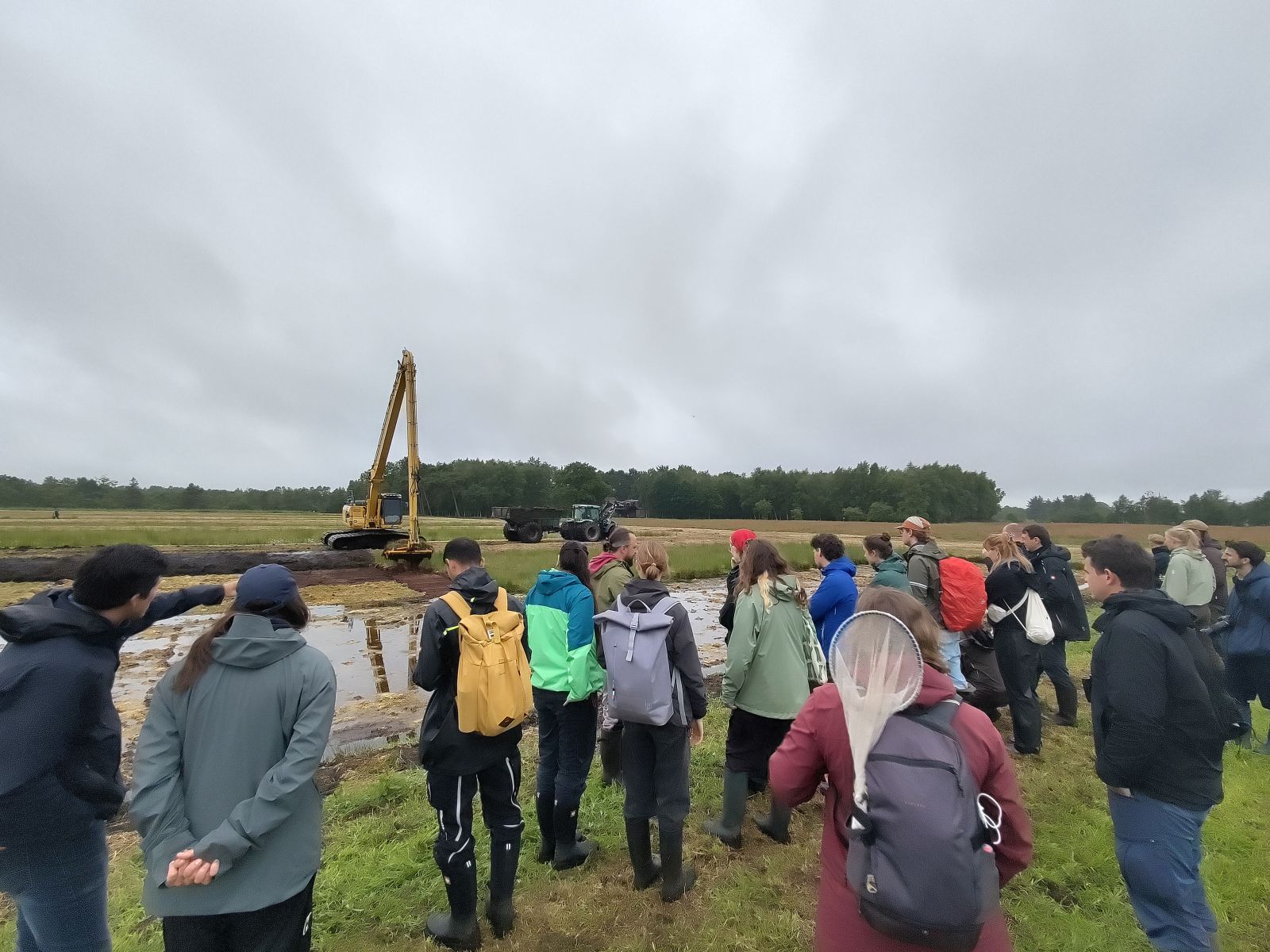
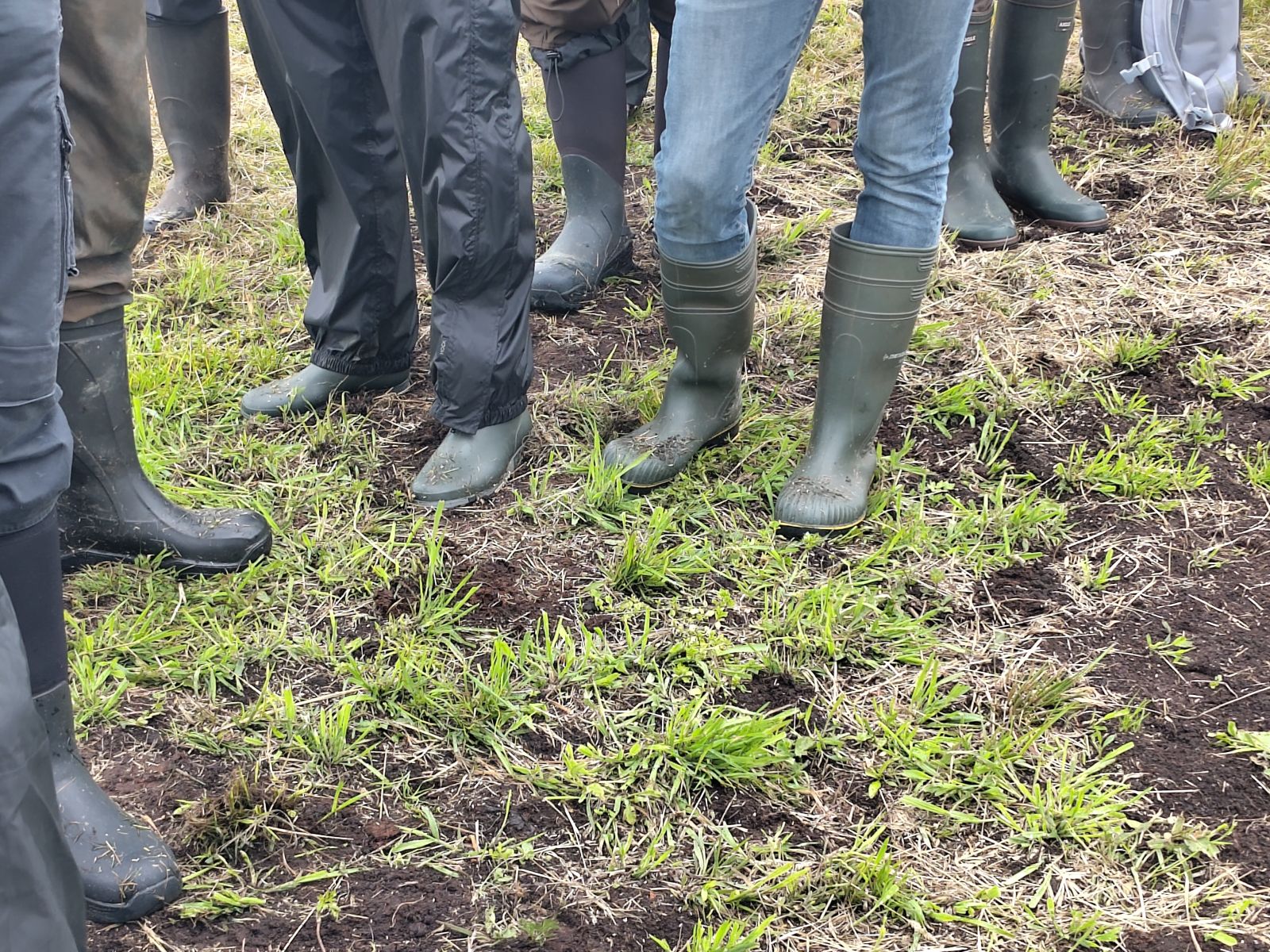
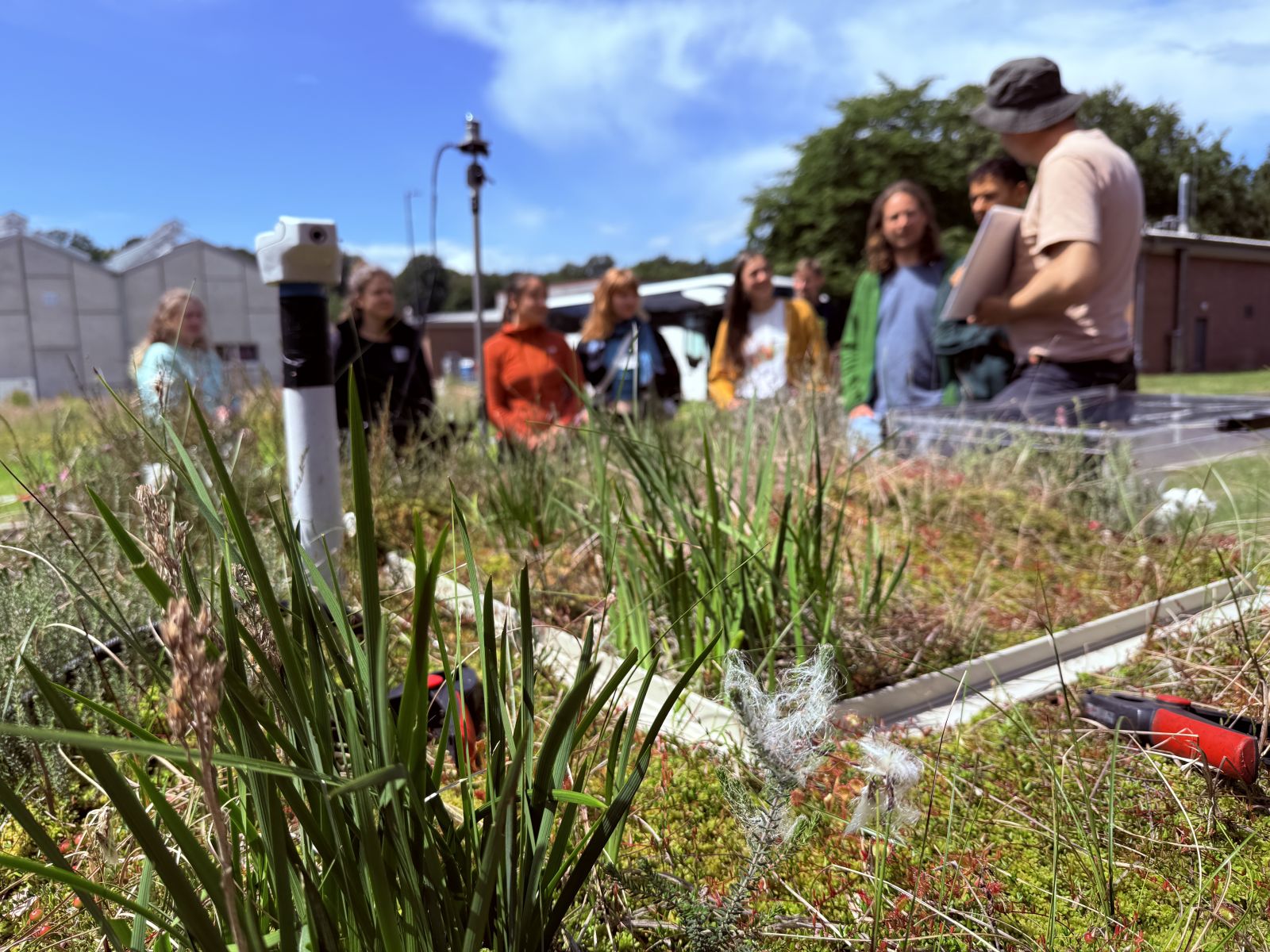
Learning was balanced with lively discussions, an interview, interactive games, role-playing exercises, and a visit to the peatland library. Participants were also given space to think creatively about the future of paludiculture and share their hopes, dreams, and visions for “Paludi Futures”. Ideas ranged from advances in paludi biomass value chains with magical sorting machines to large-scale immersive paludiculture parks, local infrastructure revolutions, and anchoring paludiculture in our social conscience with the paludi barbie in waders, and seeing peatland futures from the perspective of a dragonfly. In its own small way, the summer school became a first step toward these futures. By bringing together the expertise, curiosity and passion from different universities, organisations, and countries, it created new networks and inspired fresh ideas, questions, and collaborations. Friendships were formed, perspectives broadened, and a new generation of peatland professionals left with renewed motivation and optimism for the future development of paludiculture.